
As I drove down Washington Street in Charleston yesterday, I saw a prototypical West Virginia scene. A driver’s car had conked out in the middle of the intersection. As the light turned green, the driver had to hop out of his car and desperately try to push it out of the way as cars lined up behind him waiting to get through.
What was the response of those around him? It seemed like a competition for who could leap out of their cars and off the sidewalk to help the guy fast enough. At least five or six people immediately came to his aid, pushed the car to the side, and offered their cell phones to call for help. Not one horn blow. Not one angry voice.
This scene happens more often than not in West Virginia. And, at least in the dozens of cities I’ve been to around the country, it doesn’t happen quite that way in other places. Sure, there are friendly people in other cities (Seattle was pretty laid back and probably wouldn’t have blasted their horns like in Philly; but I don’t think the Seattleites would have put down their latte to help as quickly), and there are times when you’ll hear a stray horn blow in West Virginia. But that scene crystallized the experience you’ll find most often.

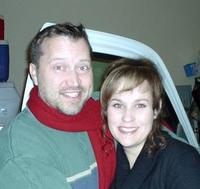
Michael and Sheree Krause have certainly experienced it. Transplants from Oregon (and formerly Seattle, where Michael worked for Microsoft as a Software Design Engineer), the Krauses moved to Charleston just about a year ago. Michael is a Senior Technical Member and project manager for a local IT services firm.
Before moving to Charleston, they knew very little of West Virginia. They did most of their research on Pittsburgh before becoming aware the job he was being offered would be in Charleston. There was some trepidation. “We didn’t know what to expect,” said Michael. “We knew it was supposed to be beautiful, but we had very few pre-conceived notions other than knowing it was a smaller area.”
What they found in their South Hills neighborhood stunned them. The parents of three wonderful children, they found a welcoming spirit that they had never experienced before. Neighbors streamed across the road to help them unpack. They brought food. They offered their support in whatever they needed. They invited them to their church.
“I had never experienced anything like that,” said Sheree. “We don’t have family here, but it’s like we already have family all around us.”
Sure there are trade-offs. Less shopping choices is a big one. And the Krauses aren’t sure what the future holds. There aren’t as many high-tech firms around if Michael’s current role doesn’t work out in the long-run. But based on their experience in West Virginia so far, they are hooked and hope to stay. It’s not unlike most reports we hear about: once people actually experience the people of West Virginia, it’s easy to get addicted to them.